This article is about a recent folk legend of the Lugbara people, in Northern Uganda. It has been edited for a modern audience. For more like this, follow us by email, or RSS, or Mastodon. Or join our WhatsApp or Signal group.
The Yakan Movement
written by J. H. Driberg
During 1918 and 1919 unrest among the Lugbara people of Uganda revealed the existence of a secret society known locally as Yakan. It was also known to Europeans as the ‘Allah Water Cult’ for reasons which will become obvious. The internal organization of this society is not without interest to anthropologists, but of more general importance are its origin and ramifications. I shall deal with these first, therefore.
It is impossible to determine the age of the society with any degree of accuracy, but it was either inaugurated or resuscitated about fifty to sixty years ago. It has been revived from time to time, as occasion demanded, and each of the incidents tabulated below was preceded by an active period of propaganda on the part of the society. It is said to have appeared first among the Dinka, who, after drinking the sacred water, wiped out the station of Rumbek in the Bahr-el-Ghazal, killing some 800 of Emin Pasha’s soldiers, and prior to that it was used at Khartoum during the Mahdi rising, though it is uncertain on whose behalf.
Yakan gradually drifted southward. Under its influence a combined, though unsuccessful, attack was made by the Bari on Emin’s station at Rejaf. The attack was so vigorously pressed, however, that it was only possible to defeat the Bari by calling up the troops from eight other stations. This movement had been preceded by a Mahdist incursion on Amadi, which resulted in the evacuation of the government troops after eighteen months of fighting, and it was shortly after this event that the Dinka brought down the water for sale to the Bari.
Yakan’s further spread southwards is said to have followed the line of Emin’s troops, and the Bari seem to have been responsible for taking it to the Lerya and Lotuko nations, but the Acholi appear to have left it severely alone.
A renewal of Mahdist activity drove the remnants of Emin’s troops from Dufile in Madi territory to the Alur country, with the result that Magoro, a leader of the Mundu, seeing that the movement had enabled the Dinka to offer Emin a successful resistance with the help of the sacred water, obtained a supply of the water from the Dinka. The whole Mundu people welcomed the movement, and when the Mahdists attacked they drove them back with great loss.
The Abukaya then went to Magoro and asked him how he had managed to defeat the Mahdists, who had already routed Emin’s troops, and when Magoro replied that it was due to the invulnerability conferred by the sacred water, the Abukaya also embraced the movement, being followed by the Moru, Fajelu, and the Nyangbwara. These five ethnic groups then combined and waged a successful war against the Azande, who were then at the height of their victorious career of conquest. It was about this time, too, that a Mahdist fort at Indiripi was broken up and the survivors were chased to Rejaf.
It was somewhere in the 1890’s that a Fajelu, by name Logworo, bought some of the water from Magoro, and Rembe, a Kakwa, obtained it from him. Through these two men, Rembe and Logworo, the movement spread to the Lugbara, who soon gave a practical demonstration of its efficacy. After Emin’s retirement with Stanley, four companies were left to garrison Wadelai under Fademula Bey, and from this headquarters a patrol of eighty men was sent towards Terego, where they were engaged by the Lugbara and completely annihilated, the emblems of Yakan being prominently displayed during the battle. An avenging force was also defeated, losing one officer and sixty men. It is not quite clear whether the Lugbara refer to a different occasion or to an exaggeration of the event just noted; for they claim that they attacked a column of Emin’s near Mount Wati, consisting (reports vary) of from 200 to 700 rifles, and that they killed about 700 “Nubis,” including non-combatants. At any rate to this day the amulets worn by Lugbara women consist of melted-down rifles taken from Emin’s followers.
After the Belgian occupation of Lugbara and Kakwa territory, leased to them by the Anglo Egyptian government, the Lugbara projected an attack on the Belgian post near Mount Wati consisting of 400 soldiers, but for some reason, doubtless the vigilance of the Belgians, the rising fell through. The Belgians, however, were fully aware of the disaffection and realized that, as far as the Lugbara were concerned, the source of the trouble lay among the Kakwa. They accordingly collected all Emin’s “Nubis” and stationed them among the Kakwa, with the result that risings met with but indifferent success and the movement appeared gradually to lapse.
When the Mahdists again made a demonstration to the south, these four companies retired before them, but only two escaped, the others being destroyed near Relli. These two companies established themselves on the north-west shore of Lake Albert, where the Belgians abandoned them, withdrawing inland. At a later date Major Preston, on behalf of the Uganda government, visited these “Nubis” and took them across the Lake to Masindi, together with a crowd of porters, “boys,” and general hangers-on. Emin’s ex-soldiers eventually enlisted in the Uganda service, and from this date events began to shape themselves for the setting of the Uganda Mutiny.
For whatever the actual causes of the mutiny were, whatever justification the mutineers might have had, it is quite clear now that what gave them the confidence to take that disastrous step was the sacred water associated with Yakan which we have seen originated near Khartoum very many years before. The sacred water was taken to Masindi by some of the hangers-on who accompanied Major Preston, and very soon the movement flourished with renewed vigour among the troops, a certain Corporal Lemin Marjuk (living at Gulu in 1919) being the principal administrant of Yakan.
From Masindi the movement spread to Kampala and Entebbe, where its existence was discovered. Despite the arrest and imprisonment of the ringleader, however, it had taken a firm hold of the “Nubi” troops, Yakan as usual promising immunity and assistance against the ruling authorities. It developed most strongly in No. XIV company, stationed in Busoga, and when disaffection culminated in the mutiny all the “Nubis” were members of the movement. Everyday the shrines of Yakan were visited and promises were made of rifles and ammunition and victory over the Europeans.

The Blossoming of the Big Tree
Dilman Dila
eBook $7 | UGX 15k
“…delightful — wonderful worldbuilding with a thoughtfully-constructed solarpunk vision as well as a compelling story that hooks you in!”
“…delightful — wonderful worldbuilding with a thoughtfully-constructed solarpunk vision as well as a compelling story that hooks you in!”
eBook $7 | UGX 15k
The next serious ebullition of this movement takes us to what is now Tanganyika Territory. We find it giving the final impulse to the movement which culminated in the rebellion of 1905-06 against German rule, and was probably carried down to that territory by “Nubis” who enlisted in the German forces. The rebellion was known as the “Maji, Maji Rising,” from the fact that the natives attacked with cries of “Maji, Maji” (water, water), though the significance of the cry was not appreciated at the time. In fact its full significance and its association with Yakan is only a matter of recent knowledge. In view of the importance of the rebellion and the amazing dissemination of the movement, it seems advisable to quote a few extracts from the recently published Handbook of Tanganyika, as these fully corroborate what will have to be said later about the methods and activities of Yakan. It also shows once more what a strongly integrating factor such a movement may be in welding together unrelated ethnic groups.
“The rebellion was chiefly remarkable for the combined effort of a number of ethnic groups… Concerted action by many ethnicities was generally considered to be out of the question… Meetings were held at which the general plan of action was discussed under oath of secrecy.… The rebellion was commonly known as the ‘Maji, Maji Rising’ (the word maji being the Swahili word for water) owing to a belief, prevalent throughout the whole of the disaffected area, that anyone who was armed with a certain medicine became invulnerable against bullets, which, it was stated, were turned to water. This magical concoction seems to have originated in a report that a great medicine man lived in the Rufiji River in the form of a water monster, and that this supernatural creature could dispense medicine which afforded protection against disease, famine, and every sort of evil… The medicine was a mixture of water, maize and sorghum seed, and was sprinkled on the body or taken internally… The whole was done so openly as to preclude any ground for suspicion, and Europeans were quite unaware of its distribution… Apart from the protection it was supposed to afford against the more usual calamities of native life, the medicine was endowed, according to its makers, with the sinister properties to which reference has already been made. Rifles were supposed to spurt water only, or the bullets, if fired, to trickle like water from a man’s body… The medicine was said to be far superior to the arms of the Europeans… Its power was proved in the eyes of the natives, who hurled themselves upon the troops, as though there was nothing to fear, with cries of ‘Maji, Maji’… It was often observed that those whose courage failed for a moment were sprinkled with the medicine, when their courage would then be roused to an even higher pitch of fanaticism… The medicine men would coolly announce that those who appeared to have died had merely fallen asleep and would presently rise again with increased strength and courage…. Those who took the medicine were enjoined on no account to look back lest the potency of the magic be lost.’’i
More recently there was a recrudescence of the movement among the Lugbara of Uganda and the neighbouring ethnic groups in the Congo and the Southern Sudan, culminating in a local rising during 1919 and a state of tension which persisted for more than a year afterwards. Only the speedy arrival of reinforcements and prompt punitive measures frustrated the mobilization of the whole ethnic group and the co-operation of Logo and other allied nations across the frontier. It was this outbreak which serves as the occasion for a study of Yakan.
The movement was universally known to the Lugbara as Yakan. Mr. Bardwell, late of the Yei River District (Sudan), has suggested that Yakan is the name of a Kakwa god, but I could not find any local Kakwa prepared to support this suggestion. Nakan, however, is the name of the sacred snake, and a cult may possibly, and very naturally, have been associated with what is most venerable in the religious beliefs of these people. Yakan is also a kinship term among the Kakwa, corresponding with dede (maternal uncle) among the Lugbara, who used the terms Dede and Yakafi indiscriminately as passwords. It would appear from the use of these words, therefore, that the movement was readily assimilated to the ancestral aspect of Lugbara religion, especially when we find, as we shall, that survival after death is dependent on joining the society. The sacred water associated with the movement was generally called “Water of Yakan,” and less often “Allah Water” or “Rabbina” (terms which originated with the Mahommedan “Nubis,” who also knew it as “Ndawa”).
As has been said, the terms Yakan and Dede are used generally as passwords and greetings by all members of the society, but the senior members of the movement have a small stick, recognizable by its shape, which serves as a passport. It is cut from a tree known to the Lugbara as inzu. There are three levels of members, of which the lowest hold no official position, but attend the meetings and partake in the ceremonials. The highest level consists of the great owners of the sacred water; they alone carry the inzu passport and they alone know all the Yakan songs and dances. The members of the middle level also own water which they have purchased from the highest level for distribution to members at a fee; they do not, however, know all the Yakan songs. The members of the two higher levels are known as chiefs of Yakan, irrespective of their social position outside of the movement. Membership is almost compulsory, as any who hesitate to join are speedily induced to do so by terrorization and maltreatment.
The most important property in the ritual of this movement is the sacred water, to which repeated reference has been made. This, so far as the Lugbara are concerned (and it is with them that we are specifically dealing), has always been obtained from the Kakwa. It is bought by members of the highest and middle levels for distribution. In 1918-19 it was procured from Logworo and Rembe over the Sudan frontier, and was rapidly disseminated among the two higher levels of members. The movement is allowed to lapse and it is periodically revived, but it is interesting to note that the most prominent members of the highest level appear to inherit their position. Rembe may be cited as an example; his father, Achu, and his uncle, Anua, were both leaders of the movement. Among the Lugbara there are also several instances of this inherited position, notably Achua and his father Ipa, and Mba and his father.
Logworo in 1918 was so inundated with applicants that he had a special camp built consisting of, at its zenith, some 200 huts. He had a sawish or sergeant, armed with an imitation rifle, who was responsible for keeping order in the camp, while Logworo chiefly concerned himself with the collection of the fees, leaving the actual distribution of the water to a lame underling. The sleeping accommodation which Logworo provided was made necessary by his refusal to dispense water to individual applicants; they had to wait till a sufficient number had collected, and before the distribution of the water they were publicly harangued by Logworo on the conditions, privileges, and duties imposed by the society. In front of his house stood a very large number of pots of the magic water, but none of the applicants knew who filled them or whence the water was drawn. The water was said to have been given by Yakan, who lived at the spring (itself also called Yakan). The fees paid to Logworo at that time were one rupee if the applicant wanted to drink the water on the spot, and two rupees if they wished to take it away. Sometimes goats were accepted, and an applicant might be told to “kill a goat in honour of Rabbina.”
Rembe, a Kakwa of the Yendu family, living on the Kaia river, was rather a different type of man from Logworo, sophisticated, but without the experience which Logworo had acquired by travel. As a child he sold water to the Lugbara, and his father had promised the Lugbara rifles in the early 1890’s. Rembe was not so popular as Logworo, however, with the Lugbara, as on an earlier occasion numerous Lugbara died after they had purchased his water, and the nation was shortly invaded by the Kakwa. The Kakwa were unusually successful, and it was suggested by the disconcerted Lugbara, with some probability, that the water may have been poisoned.
Actually a drug prepared from a plant of the daffodil order, known to the Lugbara as kamiojoii, is mingled with the water. This is a very powerful drug, with an exceedingly stimulating effect on the heart. For a period after its use it induces a condition of violence bordering on mania, but a correspondingly profound period of reaction follows. Several deaths were reported resulting from an overdose. This drug, then, is added to the water, the sacred properties of which are thought never to diminish, however much subsequently diluted with profane water. At least one instance is known in which the water was poured over the floor of a temple, thus impregnating the temple with its essence; when water was required for ceremonial purposes it was fetched from a stream, and some earth from the temple’s floor was mixed with it, rendering it efficacious.
A temple belongs to an owner of water (whom I shall call a dispenser for the sake of brevity), each dispenser having his own temple. It is not necessarily situated in his village. Generally in fact it is not, but in some secluded spot at some distance from the village. To the temple is attached a permanent guard of askaris (police or soldiers), armed with spears and bows and arrows, under the control of a “corporal.” Their duty is to keep order and to give warning of the approach of any unauthorized intruders, while with the same object in view the paths approaching the temple are guarded by poisoned arrows stuck in the ground in such a way that an unwary walker would be bound to receive a wound. The temple itself, generally called jo yakan (house of Yakan), but also sometimes known as dede (maternal uncle), is generally a large square building with one door. A corner is partitioned off as the Holy of Holies in which Yakan resides.
In the temple are stored the properties of the movement, together with the fees paid by members (except livestock, which are removed to the dispenser’s village). Very occasionally, however, a smaller hut, round but of superior structure to the normal Lugbara hut, is substituted for the squareiii building. Shrines, similar to those in use for the usual religious rites, are sometimes erected near the temple, but they are not essential. In front of the temple a “parade ground” is cleared, and in the middle of it is planted a long pole. This is called feti yakan (tree of Yakan) or loko (the significance of which I was unable to discover). More rarely it is called dede or rebenadede (= Rabbina dede); but on a previous occasion, during the Belgian occupation, the pole and temple were called Bulamatali, indicating the object of the movement’s activities. This pole is always cut from a tree known locally as kuzu, or uzu, and is surmounted by a branch of the shrub inzu, which also provides the personal insignia of the highest level of members. These trees belong specifically to Yakan rites and to no other. A large hole is excavated when a pole is to be erected, and a bowl of sacred water is buried at the site. A sheep is killed and eaten and strips of its skin are wrapped round the base and top of the pole.
A special calabash bowl is kept for distributing the water. On its back is stencilled a monitor lizard, the movement’s emblem, and in one lip a hole is bored in which are inserted brass rings paid as fees by members. All members pay a small fee – a brass ring, arrows, or chickens – to drink the water at the ceremonials. It is distributed by the “Corporal” in the calabash bowl, each member drinking a bowl full or pouring three bowls over his head and chest. A member of the higher levels who wishes to purchase water for distribution in his capacity as dispenser has to pay a larger fee – the largest known being three cows, three goats and 200 arrows, and the smallest one sheep. A dispenser of the highest level not infrequently takes the name Ola, the Lugbara perversion of Allah, and the double name Ola-Rembe and Ola-Yakan is also known.
The drinking of water is followed by a “parade” or dance, under the direction of the dispenser, but chickens (and sometimes a bull) are first sacrificed at the pole before the dance begins. This ceremonial dance is quite unlike the usual dances (though these are sometimes included), and consists of one figure, a kind of shuffling movement, which is quite clearly based on the military “marking time.” The dancers hold imitation rifles in their hands, made either of reeds or the mid-rib of palm fronds, and sing the songs which the dispenser teaches them. These are the Yakan songs which the dispenser himself learnt when he bought the water from Rembe or Logworo. While they sing and dance they go through the three motions with their rifles, similar to aiming, ordering and presenting arms. The whole ritual is so obviously based on associational magic that the point requires no further stressing.iv
The water of Yakafi is believed to confer the following benefits on members:
(1) Immunity from death by disease.
(2) Restoration of ancestors to life.
(3) The resurrection of dead cattle.
(4) Immunity in flouting all government orders and in refusing to pay taxes.
(5) Immunity against government rifles which would only fire water.
(6) The drinkers would receive rifles in due course, but must first practise with reed rifles till proficient.
On the other hand those that refused to drink the water would become termites when they died.
We may conclude this survey of the activities of the Yakan by briefly considering its objects. In the first place, it is to some extent a protection against disease. This is specifically the first benefit which the water is said to confer, and we found a similar belief in the area affected by the “Maji, Maji Rising.” In a revival of the movement during 1920 it was probably started by the Kakwa to counteract cerebral-spinal meningitis, which was a new epidemic to both Kakwa and Lugbara. It may be observed, during the quiescent intervals of the movement, the poles are sometimes not removed, though the water, the temple and all the organization entirely lapse. It was suggested, too, by certain interested parties, desirous of concealing their revolutionary intentions, that Yakan is a protective deity over crops, but this is at variance with usual Lugbara custom and is against the weight of evidence. During the epidemic of meningitis a sacred goat appeared, driven over the Congo border, and later a white calf, both ornamented with bracelets and ear-ornaments. It was perhaps a natural assumption that this was in the nature of a “scape-goat,” and in support of this interpretation it was said that the bracelets came from a man who had died of cerebral-spinal meningitis. Nevertheless, as at the same time the society prohibited the cultivation of grain and the payment of tax, it is clear that the countering of disease was never the only motive of its activities. It would also appear that in Masindi, before the mutiny, both goats and chickens were ornamented with necklaces and bracelets and formed part of the ceremonial when the movement was flourishing.
On every occasion the medical aspect is shortly superseded by the revolutionary idea; during the revival of 1920 the latter was the dominant belief in less than two months. The military character of the organization is evident from the fact that each of the risings which we have detailed was preceded by the drinking of the sacred water, and by the reed rifles and pseudo-military parades. The frequent use of the name Rembe as a war cry is a further indication. But while the Yakan is directed against aliens and any form of alien domination, it is not essentially anti-European, but is quite broad-minded in its operations. It assisted the Mahdi at Khartoum and subsequently contrived the massacre of the Mahdists in the south. It has operated against the “Nubi,” the Belgians, the British, the Germans, as well as against the Azande and other African nations which attempted to interfere with the liberties and institutions of ethnic groups which they aspired to dominate. Such societies and cults, designed to maintain ethnic culture against aggression, are not uncommon, and reference need only be made to the Nyabingi in Rwanda, which has been directed against ruling aliens long before the advent of Europeans, though Europeans are now naturally enough included in the scope of its activities. The Nyabingi is mentioned as a parallel, without any suggestion that the two movements are associated. Indeed, despite the fact that a sacred sheep also occurs in the Nyabingi ritual, there is hardly any similarity at all between the two, except in the object at which they aim.
iThe Handbook of Tanganyika, pp. 74, 75, 76.
iiThat is, “lion’s medicine.” This is the plant which according to many ethnic groups a lion is supposed to chew before going out to hunt. If this belief is correct—and there seems to be more than a little in it—this practice would account for the different reports which are current concerning a lion’s courage. Emboldened by kamiojo, a lion will prove himself courageous even in the face of rifle fire, but if discovered during the period of reaction he will behave like a poltroon.
iiiAll other Lugbara huts are round and very small. The type of building sufficiently indicates the foreign (and northern) origin of the movement. When writing of the Nebeli, Lagae says that the meeting-place (called basa) is like the place of seclusion during the circumcision ceremony. It consists of a rectangular house out of the way in the bush. A fire is kept perpetually burning in the house by a man and a woman. There are small houses for initiates and members surrounding the central building. Recruiting is voluntary or by force, and chiefs are induced to join as well. Calonne-Beaufaict adds that the society has distinctive collars and bracelets, and a password. They both agree that Nebeli has ramifications in all the nations of the Welle valley of the Congo, and that it is the chief integrating factor between ethnic groups which are natural enemies. It appears that the Nebeli (pronounced “ beli’’ by the Azande) originated among the Mangbetu and was imported into Zande country by Amadi propagandists, where the Avongara chiefs tried to suppress it as a subversive organization. In 1920 and 1921 there was a spate of sacred springs among the Dinka, which were associated with possible revolutionary movements of the same nature as Yakan. Thus it is reported that, a miraculous spring having appeared, there was great local excitement, and it was anticipated that all sections of the Nuer and Dinka would be affected as well as the Mandari. A similar incident was said to have occurred in the time of the Mahdist government, and to have been followed immediately by the withdrawal of Mahdist forces from the locality. The Atwot Dinka believed that Nyelik, the deity, resided in their pool, and that its appearance was followed by miracles, including the resurrection of the dead, which is one of the benefits also conferred by Yakan. The “Bir” or “Billi” society, which was operating in Meridi district of the Sudan at the same time, is obviously the same as the Nebeli society. It seems probable, therefore, in view of their close similarity in ritual and achievements, that ultimately Yakan is the same as Nebeli, which was brought up north by Amadi; and after undergoing certain transmutations reached Khartoum and thence returned south through Dinka agency.
ivCertain variations were observed in the Congo. There the water was obtained from Rembe through the medium of the Lugbara and taken home. A pot of it was placed in the path, and any passer-by had to drink, after which he had to run away at full speed, without looking back, on pain of death. The provision which I have italicized recurred, as we have seen, in the ritual associated with the “Maji, Maji Rising.”
Note: This article has been edited from the original for a modern audience. We replaced words that were racist, archaic, or generally problematic.
Copyright CC BY-NC-SA 4.0
Source: The Journal of the Royal Anthropological Institute of Great Britain and Ireland, Jul. – Dec., 1931, Vol. 61 (Jul. – Dec., 1931), pp. 413-420
Two Young Men and their Grandmothers
July 21, 2026
This grim and dark story from Angola follows the journey of two young men who set out to start a new village with their grandmother, but when are they prepared to face the terrors that await them in the new land?
Primal Feast
May 2, 2026
A grim and dark re-telling of a folk tale from the Nandi, in Kenya, where Hare and Elephant are best friends, but Hare is jealous and steals all the cattle that belongs to Elephant, leading to a bloody feud.
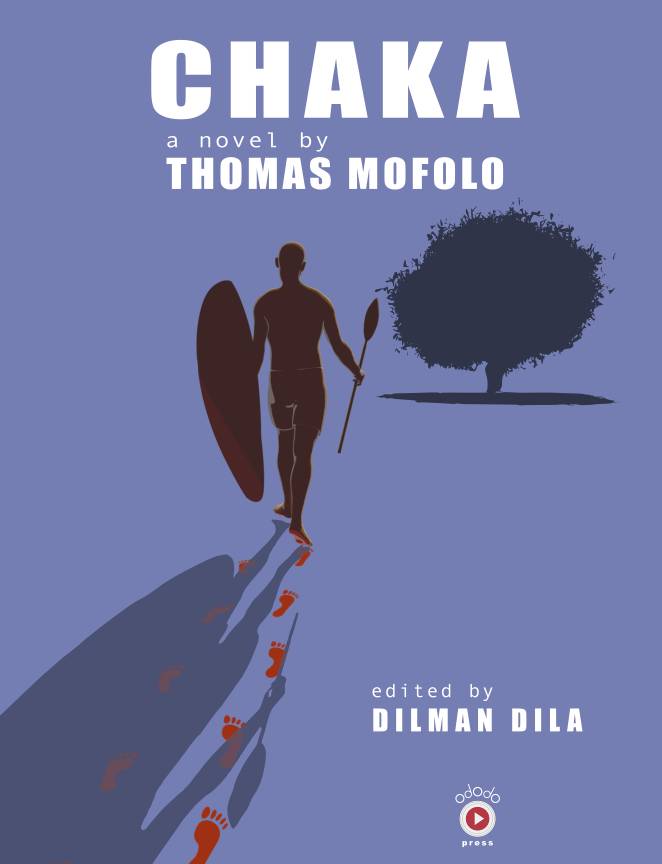
Cover Reveal: Chaka by Thomas Mofolo
August 24, 2026
The reveal of a cover of a book, Chaka, written by Thomas Mofolo. This article describes the inspiration behind the cover design and the process of making it.