There were once two young men, Katito, who got the name because of his very small size, and Kalei, whose name indicated that his father had promised to send him to work for the nzinga. They were very good friends and both were skilled hunters, which was their favorite sport. They always went out to look for game together. As they came of age, Kalei was wary of spending the rest of his life in a palace, for he loved going after game in the open wilderness. He begged the nzinga that perhaps he could serve her by bringing her game meat every so often, but she preferred a servant to work around her courtyard. If he loved animals, perhaps he could be in charge of her kraal.
To avoid this gloomy destiny, Kalei convinced Katito that they should run away to a far away place and start a new village, where they would be closer to the game and hunt whenever they liked. Then they could smoke the meat to preserve it and take it to bigger villages to trade. Eventually, other hunters would join them and their village would grow. Katito agreed.
Both young men were very fond of their grandmothers, and so asked them to come along, since the knowledge of the grannies would be invaluable in their new quest. The grandmothers, eager for adventure in their old age, agreed.
The four people then set off to a place that they had identified, and it was far from any other human settlement. When they arrived, the first thing to do was build huts in which to stay, so they at once began to build, each constructing a hut for himself and his grandmother.
Katito, who was also a carpenter, finished his hut within a day, and his grandmother entered it. But Kalei struggled with construction for he could not saw wood as swiftly as Katito. That first night, he and his grandmother slept out in the open. It was nice, with the stars above them, and a fire to keep them warm and the animals away.
The next day, before he could roof the hut, a huge storm fell. So Kalei and his grandmother ran to Katito’s hut, and he said cheerfully, “Oh brother, the sky is really angry in this place. Let my grandma stay in your hut until mine is finished.”
But just one day in the wild had soured Katito’s spirit. He missed the life he had left behind. Here, they were all alone, with no neighbors, and they were totally cut off from all the other friends they had. He could not go to the market to dance with the girls and drink with the boys. It now looked like a very stupid idea to start their own village, and in a place so far from everyone else. He blamed Kalei for tricking him, and so he refused to give them shelter.
“You also have hands,” Katito said. “Why didn’t you hurry with construction? Go find shelter elsewhere, but I won’t let you into my hut.”
The grandmothers were stunned to hear this, and Kalei was very shocked too. But he did not complain. He took his grandmother’s hand and they raced to a nearby tree, called the omanda. It was very large, and its trunk had holes that could serve as temporal rooms. For a moment, they were safe from the storm.
But then, the rain increased, and lightning struck the tree, ripping the trunk open and killing the grandmother.
Kalei wept.
After the rain, Katito and his grandmother came out to mourn with him, but he was inconsolable, and blamed them for the death. If Katito had given them shelter, his grandmother would still be alive.
He wrapped up the corpse in bark cloth, put her upon his shoulder, and started off to the other side of river Quanja, where there were pools into which they threw those who died. He did not allow Katito and his grandmother to accompany him, though they tried to.
As he was on his way, he met a nualehela, which was a spirit that resembled a hideous masked person. It greeted him with friendliness.
“Where are you going with your grandmother?” the naulehela said.
And the grieving young man replied in a song, using the phrase ‘na kalunga’, which is how they greeted their nzinga. He sang:
Na kalunga, oh hi-hi-hi
I am carrying her to the other side
of the river Quanja,
and the deer is crying hi-hi-hi;
Oh, the deer is crying hi-hi-hi.
The naulehela then said to him, “Cut off her head and give it to me, so that I may use it as a gourd to drink water.”
Kalei hesitated, for this was indeed a very strange and grotesque request, but he also knew if he was kind to a spirit that meant him well, it might do him a good favor later on, and so he took out his knife and cut off his grandmother’s head, and gave it to the naulehela.
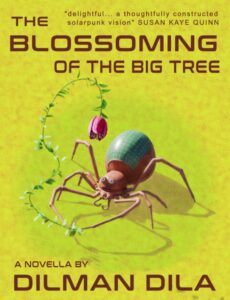
eBook $7 | UGX 15k
“…delightful — wonderful worldbuilding with a thoughtfully-constructed solarpunk vision as well as a compelling story that hooks you in!”
eBook $7 | UGX 15k
“…delightful — wonderful worldbuilding with a thoughtfully-constructed solarpunk vision as well as a compelling story that hooks you in!”
After that, he continued on his journey, and every so often he met another naulehela, each asking for a different part of her body. One asked for an arm with which it might stir its mush. Another asked for the legs so it might use it to pound grains. And to each request, Kalei said yes and cut off a part of his grandmother.
Soon, he met a creature that looked like a little old woman. “Give me the lungs,” this one asked, “because they are soft and my teeth are all gone. I can’t eat meat anymore.” And so, he ripped out his grandmother’s lungs and gave it to the naulehela.
By the time Kalei had crossed the river to the other side, there was very little left of his grandmother. This part of the river had ponds, which were ringed with stones, and Kalei saw another naulehela sitting on one of these stones.
“Throw your grandmother into this pool,” the nualehela said, “and the water will become clear.”
Kalei approached the pool, and he saw that the water was gray like that of the river. He could not see the bottom. He threw what was left of his grandmother into the pool, and stood upon the bank, and then, to his surprise, he saw her come to the surface twice; and the third time she sank. Then at once the pool became so clear that he could see the bottom, and there were people down there, with their skins as red as fire. They crawled out of the pond, one at a time, red men, red women, red children, red people whose gender he could not tell, and they all had their household belongings, and cattle, and goats, and chicken, and many things. Everything they needed to start a village.
The last person to come out of the pond was his grandmother, or what looked like her, for she was now a red woman.
She asked him, saying, “Who am I?”
He of course recognized her, though she was red from head to toe, as if she had smeared herself with a certain type of ointment, but her hair was also red like coal in the cooking stove.
“You are my maikulu,” Kalei said.
“Come,” the grandmother said. “We will start a village.”
So Kalei walked ahead of the red people back to the place where they had set up the village, and they quickly built houses and started farms.
When Katito saw them coming and starting to construct, he grew sadder. He and his grandmother could barely start a farm, and they wary of surviving on only meat. When he saw all that was happening, he became filled with greed and jealousy. He asked Kalei what had happened, and Kalei told him everything. Then he ran back to his hut.
“Grandma,” he said.
“Yes, my son,” the grandmother replied.
“Let me kill you so that we can also get many red people to work for us. See, they will bring us cattle, and goats, and chicken, and any wealth we ask for.”
Of course, his grandmother rebelled. Still, he struck her and killed her, and, wrapping her up in bark cloth, he lifted her upon his shoulder and followed the path that his friend had taken, just the day before.
Soon, he met the friendly naulehela, which greeted him kindly.
“Where are you going with your grandmother?” the nualehela asked.
When Katito replied, he did not use the honorific ‘na’ prefix, just saying ‘kalunga’ as if the spirit were his equal. He sang the same song.
Kalunga, oh hi-hi-hi,
I am carrying her to the other side
of the river Quanja,
and the deer is crying hi-hi-hi;
Oh, the deer is crying hi-hi-hi.
“Give me the head,” said the naulehela, “to drink beer with.”
The young man laughed. “Why should I do that?” he said.
Then he went on and though he met many other creatures, he did not give them anything they asked for. Instead, he would tell them, “The other boy is insignificant, but I am far wiser.”
He also met the little old woman, and she begged for the lungs, saying, “Give them to me so I can eat them, for my teeth are all gone, and they are the only meat I can eat.”
He refused.
Then she said to him, “Though you are mean to me, let me give you advice: take your grandmother to the pool where the water is red, for that is where the red folk can be found.”
So he hurried along to the pool described, and he threw in his grandmother. He stood upon the bank waiting for her, and he stood for a long time.
A voice said to him, “A stone will not come to the surface.”
He remained there a long time, and soon some little boxes appeared, and with them a little old man who he took to be a servant. The man was not red. He was white as though he had smeared himself with flour.
“These boxes contain that which you so much desire,” the little man said. “When you reach your village, build a very fine house, and don’t forget to put in windows. Then, lock yourself in, and ensure you are all alone, before you open.”
When Katito returned to the village, he said to Kalei and his red people, “Look, I went and got something too!”
He quickly cut down a tree and built a bigger hut and put in some windows. When it was finished, he shut himself in, and began to open the boxes. But the first one contained snakes. He did not see what was in the other boxes, which he thought might contain precious presents, for the snakes bit him. He died instantly.
Kalei and his red people burned down the hut, with him and all the boxes inside, and upon the ashes they planted a forest. To this day, they call it The Small Forest, and it still grows there, a hundred and fifty years later.
© 2026. Ododo Press. All rights Reserved.
This is a derivative work and it is not the original folk tale. For permission requests, contact us.
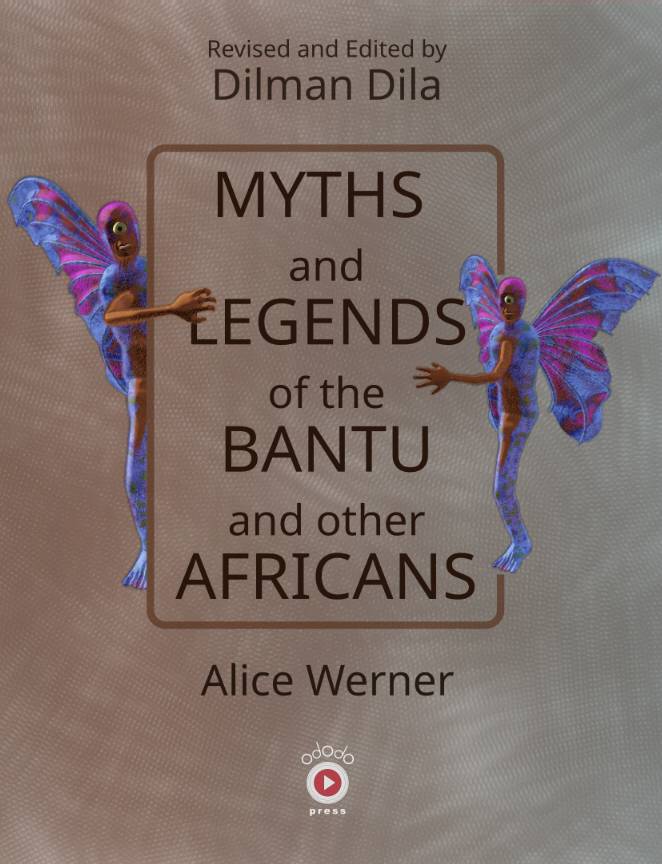
Myths and Legends of the Bantu
March 26, 2026
A comprehensive guide to the myths and legends of African people, with a particular focus on the Bantu.

Primal Feast
May 2, 2026
A grim and dark re-telling of a folk tale from the Nandi, in Kenya, where Hare and Elephant are best friends, but Hare is jealous and steals all the cattle that belongs to Elephant, leading to a bloody feud.
The Enchanted Guinea-Fowl
June 29, 2026
A folk-tale from the Lango people, in Northern Uganda, narrates the encounter of a family with a guinea-fowl that got caught in a trap. While the mother and her children can see that it’s the bird of jok, the father ignores warnings to a great calamity.