This folk tale is from the Lango people, in Northern Uganda. This is not the original tale, and it is a derivative work, retold for a modern audience. For more like this, follow us by email, or RSS, or Mastodon. Or join our WhatsApp or Signal group.
A certain hunter set his trap, but he was a little too lazy to go and check it. So he sent his daughter saying,“Go and look at my trap, I have to finish this beer.” And he sat under a tree in his homestead while his daughter went to see the trap. She found a guinea-fowl caught in it, and it looked big and juicy.
But just as she reached out to grab the guinea-fowl, the bird let out a loud cry in the manner of their kind, making a sound that, to the girl, seemed to be ‘kirijakija.’ Then, it broke out into a song in a human voice, and she was a taken aback. She stepped away from the bird.
“Little girl, little girl,” the guinea-fowl sung, “kirijakija, what have you come to do?”
It’s voice was sweet, and captivating, reminding her of the musicians in the moonlit dances. It soothed the girl, and so she quickly recovered from her fright, and from the shock of hearing a bird speak like a human.
“I came to look at the trap,” the girl said.
And the guinea-fowl, still in a sing-song, asked her, “Whose trap is it?”
And the girl replied, “It is my father’s trap. He set it.”
Then the guinea-fowl broke into a mournful song, pleading with the little girl, it’s voice full of tears. “Go and tell your father to let me go,” it sang. “I’ll give him a white bead and a white sheep, if he lets me go.”
So the girl hurried back home and found her father a little tipsy from the malwa, and she told him what the guinea-fowl had offered.
“You are a bad child!” the father said, and he abused his daughter. “You are good for nothing. You can’t even do a little task I ask you to do.”
So the man sent his son, who was a little older than the girl, and the son went to trap and he found the guinea-fowl. His sister had told him all about it, and so when the bird spoke, he did not grow frightened.
“Little boy, little boy, kirijakija,” the guinea-fowl sung to him. “What have you come to do?”
And the boy replied, “My father sent me to check the trap.”
So the guinea-fowl made another offer, “Go tell your father that I will give him a white chicken, and a white sheep, and a white bead, if he lets me go.”
The offer seemed reasonable and the boy returned home and told his father, but the man was very angry when he heard that and abused his son just as he had abused his daughter. Then he sent his wife, and the guinea-fowl made her the same offer it had made to the children, adding to it a white piece of bark cloth, which the wife thought was very generous since white bark cloth was very hard to come by. When the man heard this, however, he was now a little tipsy and so he became even angrier, and he went to the trap himself.

The Blossoming of the Big Tree
Dilman Dila
eBook $7 | UGX 15k
“…delightful — wonderful worldbuilding with a thoughtfully-constructed solarpunk vision as well as a compelling story that hooks you in!”
“…delightful — wonderful worldbuilding with a thoughtfully-constructed solarpunk vision as well as a compelling story that hooks you in!”
eBook $7 | UGX 15k
Now, the guinea-fowl sang their song, but before they could make the sound, kirijakija, the man seized the guinea-fowl from the trap, to take it home.
So the guinea-fowl sung a new song, saying, “If you seize me, seize me: but in the evening I shall seize mine.”
The lyrics confused the man, but he did not give it much thought. He took the bird home and took a knife to slaughter it, and the guinea-fowl sung its song.
“If you slaughter me, slaughter me. In the evening, I’ll slaughter mine.”
He payed no heed. He boiled hot water and put the fowl into a large calabash to pluck off the feathers. Still, the guinea-fowl sung, “If you pluck off my feathers, you pluck: but in the evening I shall pluck mine.” The man should have realized at this time that something was amiss, that a bird shouldn’t be able to sing when its in a bowl full of hot water, but perhaps the beer had gone to his head, and perhaps he thought he was only imagining the song of the guinea-fowl, so he continued with his work.
His wife and children stayed far away from him, and dared not touch even the feathers that the wind blew away. Then, as the man cooked the bird, he heard a voice coming from the pot.
“So you are cooking me?” the bird sung. “Go on, cook me. But in the evening, I shall cook mine.”
The man cooked the bird and it was ready to eat. He told his family to come and join him, but they refused, saying they would not eat a bird that had sung so beautifully. So the man summoned other men, who came with beer and they drank and made merry and prepared to eat the guinea-fowl.
But when the man served the guinea-fowl, the pieces moved on their own in the pot, and that sobered him up at once. The guinea-fowl put itself back together, and the feathers he had plucked came back onto its body, and it flew up with a sudden flutter. All this happened in a few heartbeats, and the man and his friends did not have time to react. The guinea-fowl’s beak pecked at their eyes in quick successions, plucking out their eyes and leaving them blind. And then it flew away back to the forest.
The next day, as the man wailed over his lost eyes, his wife and his children found the things the guinea-fowl had promised them. A white chicken, a white sheep, a white bead, and a white piece of bark-cloth. Then they knew that this was the guinea fowl of jok, and she feared that if she stayed with the man any longer, jok would be very angry with her.
So she divorced him, and returned with the children to the home of her parents.
© 2026. Ododo Press. All rights Reserved.
This folk story from the Lango people is a derivative work. It is not presented in its original folk tale. For permission requests, contact us.

Primal Feast
May 2, 2026
A grim and dark re-telling of a folk tale from the Nandi, in Kenya, where Hare and Elephant are best friends, but Hare is jealous and steals all the cattle that belongs to Elephant, leading to a bloody feud.
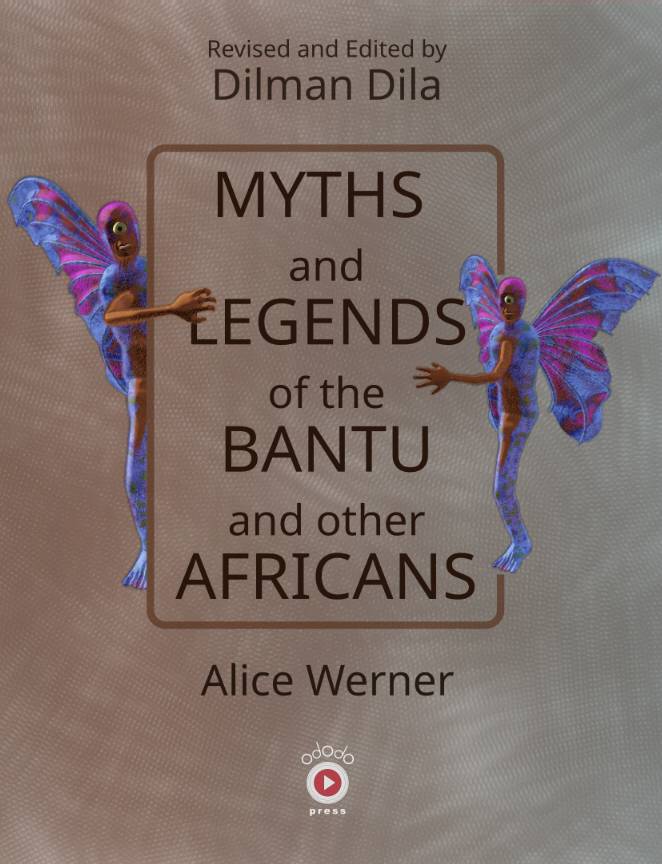
Cover Reveal: Myths and Legends of the Bantu and other African People
July 29, 2026
A brief article revealing the cover of a non-fiction work about African mythology, by Alice Werner, Myths and Legends of the Bantu and Other Africans, and what influenced the artist to come up with the designs of the cover.
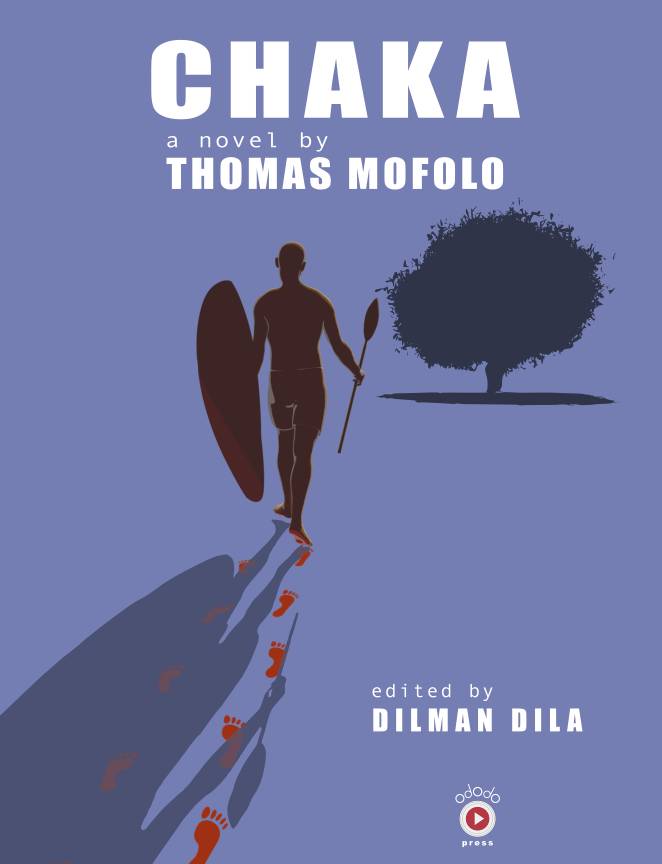
Cover Reveal: Chaka by Thomas Mofolo
August 24, 2026
The reveal of a cover of a book, Chaka, written by Thomas Mofolo. This article describes the inspiration behind the cover design and the process of making it.