
Where Rivers Go To Die
Dilman Dila
Short Story Collection
60k words | 200 pages
Genres: Science Fiction | Fantasy | Horror
Short Story Collection | 60k words | 200 pages
Genres: Science Fiction | Fantasy | Horror
USD $10 | UGX 30k
Shipping Rates
These rates are estimated, and may change even after you have made the purchase.
Delivery within Kampala/Uganda depends on your location. Upon purchase, we shall call to arrange for it.
*Please note that there are general postal restrictions to the USA, so it is costly to post anything there.
Where Rivers Go To Die + The Blossoming of the Big Tree
USD $15 | UGX 50,000
Shipping Rates
These shipping rates are estimated, and may change even after you have made the purchase.
Delivery within Kampala/Uganda depends on your location. Upon purchase, we shall call to arrange for it.
Please note that there are general postal restrictions to the USA, so it is costly to post anything there.
Price: $7.00
.mobi .epub .pdf
Price: $10.00
AudioBook $10
Pre-Order
.mp3
Blurb
A mindblowing, heart wrenching collection from the Ugandan master of Africanfuturism.
A young teen, haunted by the ghost of his father, takes it upon himself to save his brother and his people from a warlord’s marauding army. A frustrated detective is driven to the brink, confronting the vengeful spirit killing grooms on their wedding night. What happens when British colonials find Martians in Africa, a brash warrior battles his elders and ancient horrors in order to secure paradise for his people, or an exiled abiba is stolen away to find his true destiny?
Writer/director, Dilman Dila, brings us Where Rivers Go to Die, a startling collection of eight wonderful tales full of imagination, wonder, sorrow, power, and hope that weave Uganda’s wonderful myth and reality with its past, present, and possible future as only he can.
Product Details
Publisher Rosarium Publishing
Publish Date 1st July 2023
Pages 195 pages
Word Count About 60,000
Language English
Type Print (paperback)
ISBN: 978-0578368030
Categories: Science Fiction, Horror, Fantasy,
About the Author
Dilman Dila is a writer and filmmaker. His books include Where Rivers Go To Die, which was shortlisted for the Philip K Dick Awards (2024), and The Future God of Love. He was shortlisted for the BSFA Awards (2021), the Nommo Awards for Best Novella (2021), and the Commonwealth Short Story Prize (2013), among many accolades. His short fiction appeared in The Best Science Fiction of the Year: Volume Six, and in The Best of World SF V.2, among many anthologies. His films have won multiple awards. For more of his life and works, visit www.dilmandila.com
A gust blew in through the window, chilling Inspector Winyi out of sleep. As he searched for the blanket, his phone rang. He cursed. He had turned it off at midnight. He wanted to berate his wife for switching it back on. She always warned that he would miss a very important call if he kept it off. His sweet Atim. He came fully awake when he realized she could not have done it. She was dead.
“Hello,” he grumbled into the phone.
“There’s a corpse in Rock Hotel,” a voice said in Kiswahili. A woman. She had a familiar accent, like that of Atim, who had grown up in Mombasa. “It’s in the honeymoon suite.”
For several seconds Winyi could not respond. When he did, anger thundered in his voice.
“Call the station!” he said and hung up.
His thumb moved to the power button. Only then did he notice that the phone was off, the screen blank. Had he imagined the call?
The curtains fluttered in the breeze, reminding him of Atim in her bridal gown. The cold ripped through his flesh. He frowned. They were in the middle of the dry season, and yet black clouds prowled around the moon like dogs around a bitch in heat. Were the rains coming?
He closed the wooden shutters. He found the blanket on the floor and wrapped himself. Still the chill persisted. The cold licked his bones. His teeth clattered.
The phone rang again. It was off, yet it was ringing. He rationalized the phenomenon. Though not a smart phone, he could set an alarm, switch it off, and go to sleep. At the scheduled time it would turn itself on. Maybe it had a similar function to allow incoming calls.
He checked the number flashing on the screen. His frown deepened. There were only five digits, not the proper ten. It could not be an automated call, like the ones from telemarketers, those had three digits. Puzzled, he pressed the YES button.
“Go there right now,” the woman said, gentle, but firm. “You were chosen a hundred years ago to do this job.”
She hung up. The chill vanished instantly.
For nearly a minute he kept the phone pressed to his ears, though no sound came through. He broke out in a sweat, the sheets stuck to his skin.
He tried to call her back, but a robot said, “The number you have dialed is incorrect.”
He glanced at the clock. Three a.m. He called the station. Thirty minutes later, a patrol truck pulled up outside his door. He lived in the police barracks in a row of identical buildings, none of which had received paint in twenty years. The asbestos roof had cracked, and it leaked during the rainy season. The windows and doors had rotted with mold. Being in charge of the Criminal Investigations Department in the district, he had a cottage to himself with a spare bedroom. It sometimes made him feel guilty, since lower ranked officers crammed their families into extremely small tin huts.
Four uniformed officers sat in the back of the pickup, fondling AK-47s. They mumbled indecipherable greetings. None saluted. He had woken them up, yet he could have waited until morning. It might even have been a prank. He got into the cabin. The driver, also uniformed, grumbled in response to his greeting.
The hotel was a colonial palace. When Winyi arrived, its staff had not yet cleaned the garden of debris from a wedding feast. Garbage floated in the swimming pool. Under the three party tents, overturned chairs gathered dew. Bottles, used paper plates, crumbs of cake, and leftover food littered the lawn. It took thirty minutes to awake the night manager, who escorted them up the stairs to the honeymoon suite.
A woman in a bathrobe opened the door, scowling, her eyes red. She was in her mid-twenties with elaborately braided hair. Atim had been an advocate for African hairstyles. She would have been proud of this bride’s choice.
“Sorry to bother you, madam,” the night manager said. “But the police–” he could not continue for several seconds. “They want to search the room.”
“Why?” she barked. Her breath stank of alcohol.
Winyi wanted to apologize for disturbing her wedding night. She did not look like she had a corpse in the room. It might have been a prank call after all.
“Where’s your husband?” he said.
She sighed. “Asleep,” she said. “Can’t this wait until morning?”
“We only want to make sure there is no dead body in there.”
“Dead body?”
“Apart from your husband, is anyone else in there?”
“No! Of course not!”
“We have to search. It’ll only take a minute.”
“No!”
She started to close the door. He put his weight on it. She glowered at him for several seconds. He kept a smile on his face. Finally, she stepped aside to let him in.
“Only you,” she said. “No one else.”
“Okay,” he said.
Inside, the smell of sex stung Winyi’s nose. He had not made love since Atim died three years ago. Like most honeymoon suites, this one had a red theme. The rug on the floor, the bulb, the bed spreads, they were all red. The white bridal gown lay discarded on the carpet beside the groom’s suit. A champagne bottle and two wine glasses lay on the table. Empty. The man was on the bed, seemingly asleep, the sheet pulled up to his neck.
Winyi checked the bathroom. No corpse. He looked under the bed and inside the closet. Nothing. He turned back to the man on the bed and touched his neck, searching for a pulse in the carotid artery. Nothing.
“He is dead,” he said to the bride, who stood, arms akimbo, at the other side of the bed.
“You are mad,” she said.
She climbed onto the bed and shook her husband.
“Honey, wake up,” she said. She shook him so hard, for nearly two minutes, slapping him, as she descended into tears. “Honey, wake up,” she cried. “You are not dead. Wake up.”
The other officers walked in. They cuffed her and gently dragged her out.
Winyi searched for a visible cause of death. He pulled the sheet off the corpse. On the chest he found a wedding ring and a piece of canvas. He went down on his knees to examine the ring. He was no expert in jewelry, but he thought it was pure gold, with “Okot and Aceng Forever” etched on the inside. He checked the man’s fingers. No ring.
Why did the killer put it on his chest? Was it a case of jilted love?
Maybe the bride found out he was cheating on her and staged a perfect revenge. But then there was that phone call. Was the caller the other woman? What did she mean when she said that Winyi had been chosen a hundred years ago to do the job? What job?
The body bore no visible signs of the cause of death. No bleeding. No bruises. No stab wounds. No bullet holes. No strangulation marks. No vomit from poison. Nothing.
Winyi tried to pick up the ring. It was glued to the canvas, and the canvas glued to his skin. Only then did it occur to him that the canvas was also an important clue. About half the size of A4 paper, it was worn, shapeless, a pale brown color. He ripped it off the corpse. It left a raw red patch on the body. Bits of skin and hair stuck to it.
“The clock,” an officer said. “Look at the clock, afande.”
It said ten thirty, yet the time was a quarter past four. The second hand ticked dutifully, though the minute and hour hands were dead. The sound of its ticking now echoed like the heartbeat of a demon. Atim had died at ten thirty in the morning.
Winyi took it off the wall. It was a replica of a mosque. On the back was the drawing of a small boat with a lateen sail, a dhow, under it was a line in Arabic.
“That does not belong here,” the manager said.
# END EXCERPT #
“The stories of Dilman Dila leap from the page and grab you by the throat with intrigue and urgent imagination. An impressive American debut!”
~Tananarive Due, American Book Award winner
“Get ready for strange truths written in pure, powerful words. Frightened and curious, hopeful and brave, the heroes of Dila’s stories lead his readers through razor sharp dangers to the rewards gleaming at every one of his stories’ surprising and satisfying ends. From sheer delight in the futuristic flight of Ugandan ornithopters, to sweetly nasty certainty as to the alien identity of the “savages” bedeviling clueless white colonizers, Dila delivers pleasure after pleasure to minds eager for fiction’s freshest glories.”
~Nisi Shawl, award-winning editor of New Suns and author of Everfair
“A book filled with spirits, monsters, resource wars, techno organic horrors, trans dimensional beings, wondrous machines, and so much more.Where Rivers Go to Diereads like literary episodes ofLove, Death, and RobotsmeetsBlack Mirror,doused in African fantasy, folklore, and futurism. Dilman Dila shines here as one of the most creative storytellers of our age, weaving together an impressive set of imaginative, character driven, and reality-bending tales examining issues of everyday life, gender, spiritualism, politics, war, and exploitation through the lens of the strange, the bizarre, and the otherworldly. The genre needs more like this!”
~P. Djèlí Clark, author of A Master of Djinn and Ring Shout
“Amongst contemporary storytellers of the Afrocentric speculative, Dilman Dila’s work inhabits a locus occupied by few others. Every tale thins the border between the is and the could-be: boosted by straospheric imagination while grounding you in the concerns of the contemporary African. I never pass up an opportunity to read a Dilman Dila story.”
~Suyi Davies Okungbowa, author of Son of the Storm
“Dilman Dila deals in dualities. This collection by one of Africa’s most consistent speculativefiction authors is an excellent showcase of his ability to defy genre and effortlessly blend superstition and science, fear and fascination, reality and unreality, uniqueness and universality, into wonderful, exciting stories steeped in culture. Full of immersive worldbuilding and a persistent horror sensibility rendered in sharp, efficient prose,WhereRivers Go to Dieis a highly enjoyable read.”
~Wole Talabi, award-winning author of Incomplete Solutions and editor of Africanfuturism: An Anthology
”Dilman Dila is a well-established figure in the African Speculative scene. His various disciplines -film-making, animation, writing etc – inform all aspects of his work holistically. Among the results are thoughtful, deep-reaching tales, constructed upon a firmament of rounded research and experiential detail. His sparse, journalistic style amplifies the strangeness of his narratives and at times his voice resembles a slightly supernatural Hemingway.'”
~Nikhil Singh, author of Taty Went West and Club Ded
“Dila (The Future God of Love) goes for the jugular in this collection of eight afrosurrealist horror stories. … These tales are guaranteed both to tickle the imagination and give readers the heebie-jeebies.”
~Publishers Weekly
“Readers fascinated with culturally hued speculative fiction will find inWhere Rivers Go to Diea staggering Afrocentric medley that comes with stories that are plot, character- and drama-ready for cinematic adaptation. Much recommended.”
~Eugen M. Bacon, Locus
“These are primarily horror stories, but as bloody as they may become, they are just as often breathtaking. The very best of them stuck with me and kept me thinking for days after just as great science fiction stories should.”
~Little Village Magazine
Not yet available.
not yet available
Similar Books
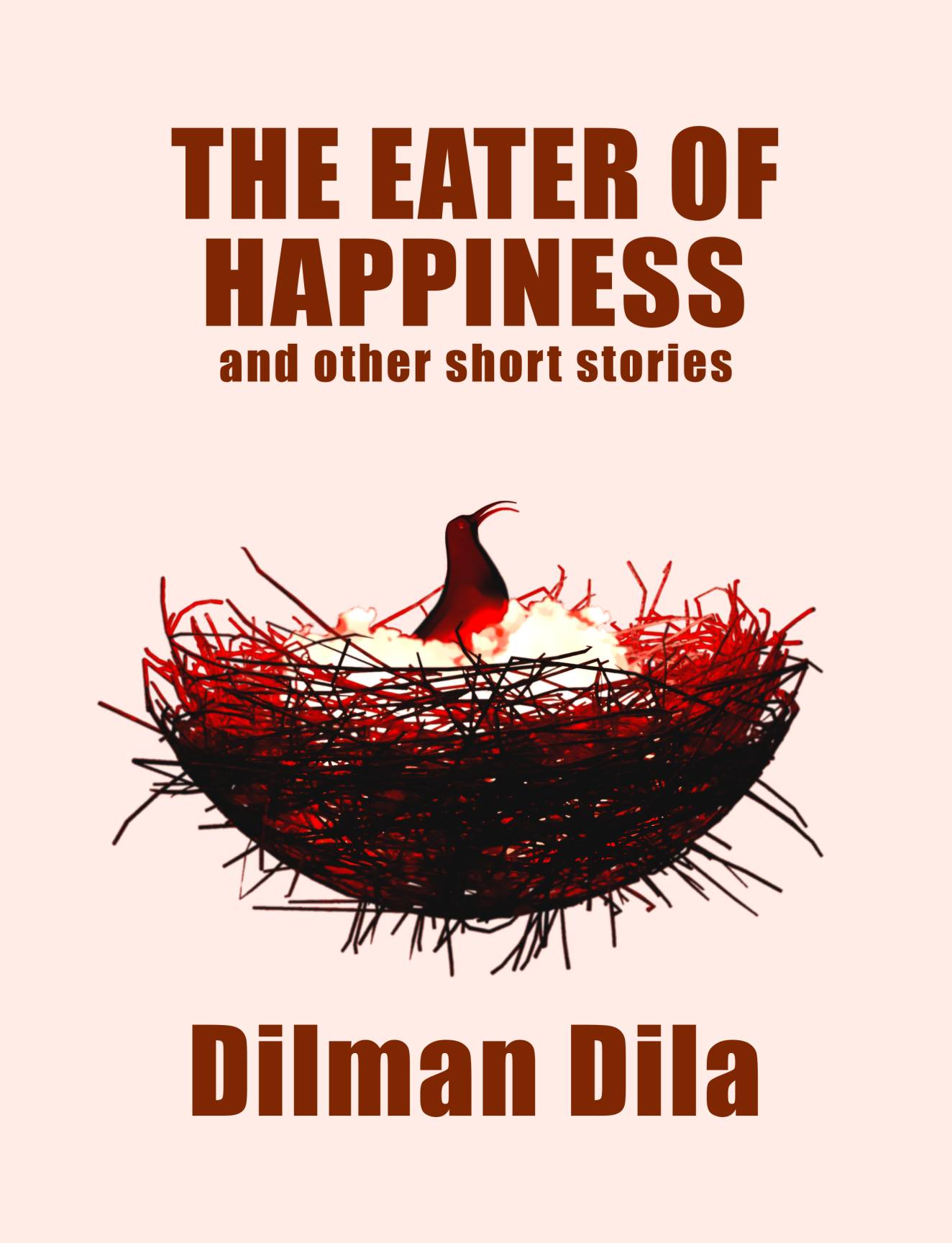

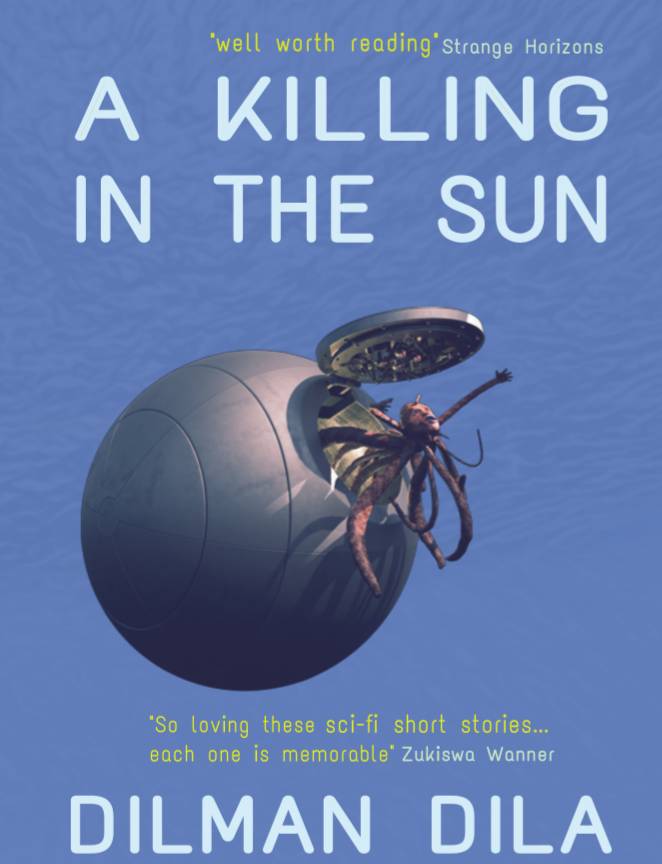


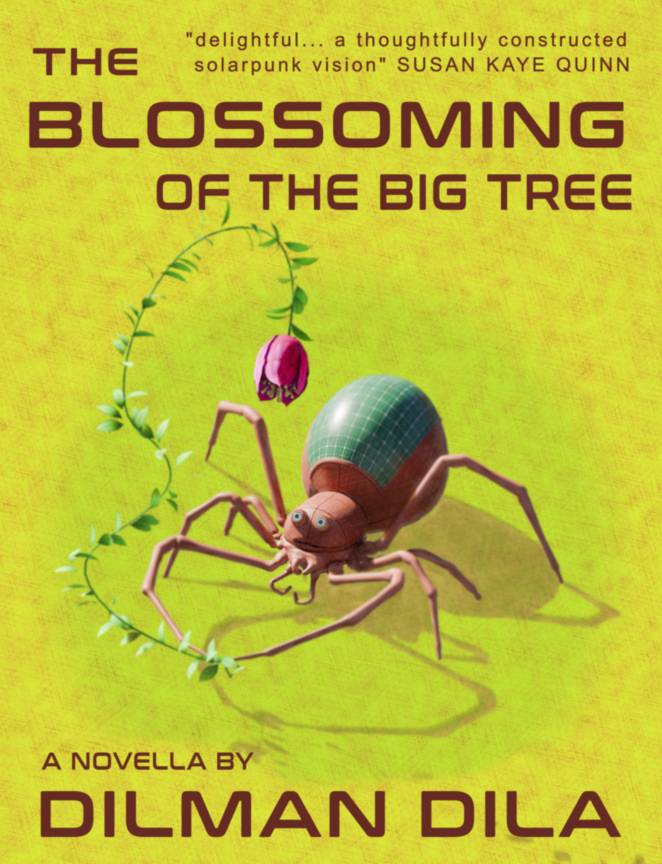
eBook $7
Pre-Order
.mobi .epub .pdf
Price: $7.00